

Late checkout
Trying (and often failing) to turn the internet back into a destination instead of an ever-present pest.

I miss when the internet was somewhere you visited.
I remember typing in individual Xangas, Myspaces, Blogspots, and Tumblrs from muscle memory and surfing away. The experience had edges. It began and ended. The ‘Net had no idea how to get into your pocket, and it certainly did not follow you into the bathroom at 11 p.m. to recommend content from accounts you’ve never heard of.
The blessèd Algorithm was novel for a while. But somewhere between the targeted ads, the engagement-optimized outrage, and whatever the trending page has become, every feed I use has turned into a yard sale. The interesting stuff is buried under a lot of stuff I didn’t come for. This is to say nothing of the slop that is being thrust under our snouts.
My favorite ‘algorithm’ has always been a friend’s recommendation. My brother’s mixtape with U2, Bob Dylan, CCR, and Kenny Loggins on cassette. Or The Report, an email thread with two or three links that my wife and I would send back and forth when we were ‘just friends.’
So I’ve been building something different. It’s a list called “Late Checkout” that I keep in a text file. It consists of accounts I want to intentionally keep up with — friends, family, a few artists, some publications, a handful of thinkers… but on my terms. I call it that because, at its best, it feels like a Sunday morning in a nice hotel, coffee in hand, nowhere to be, reading only what I feel like reading, no one elbowing me toward anything.
I visit this list on my computer or a tablet. It feels like my own personal magazine. This is bleeding over to other parts of my life, too. I find myself preferring the full album over the Spotify shuffle. I’m printing out photos with my portable Canon Ivy printer and sticking them in my Hobonichi journal instead of letting them languish in the cloud. I’m browsing our collection of cookbooks for tonight’s dinner instead of scrolling Instagram for recipes.
I’m not alone in this. A quiet movement has been building, with designers, writers, and regular people reclaiming small corners of the internet through personal websites. They call it the “small web” or the “indie web”: handmade pages, curated links, visitor counters. My “Late Checkout” list is a version of the same instinct (remembering how to go somewhere on purpose).
The atrophy that last sentence implies is real. Years into the Algorithm, I oink up whatever slop is served instead of hunting and gathering. To be alive is to be in contradiction with yourself, and whatever unscratched itch this rambly rant represents, it’s impossible not to get sucked back in, no matter how hard you try to resist. As Eugene Healey explains:
Right now, the problem is that, for most people in this economy, a “personal brand” is increasingly seen a survival strategy. In a world where you’re told your uni degree is worthless, where most junior jobs don’t even need to exist due to AI, where you’re told “just learn to code” and two years later told “coding is pointless champ, go learn plumbing.”, your image becomes your sole remaining investable asset.
As I was making my list, I also discovered that many people I might have included have simply stopped posting. (Maybe that’s why the newsletter is again the superior medium, because it comes to you, but only because you picked it). Or maybe more people than I realized have actually succeeding in going offline instead of going analog. Maybe that’s what all of us should do.
Even though I’m feeling like Sisyphus after having written all that bullshit, I’m sharing part of my list at the bottom of the newsletter. I’d love to know what destinations would make it onto yours.
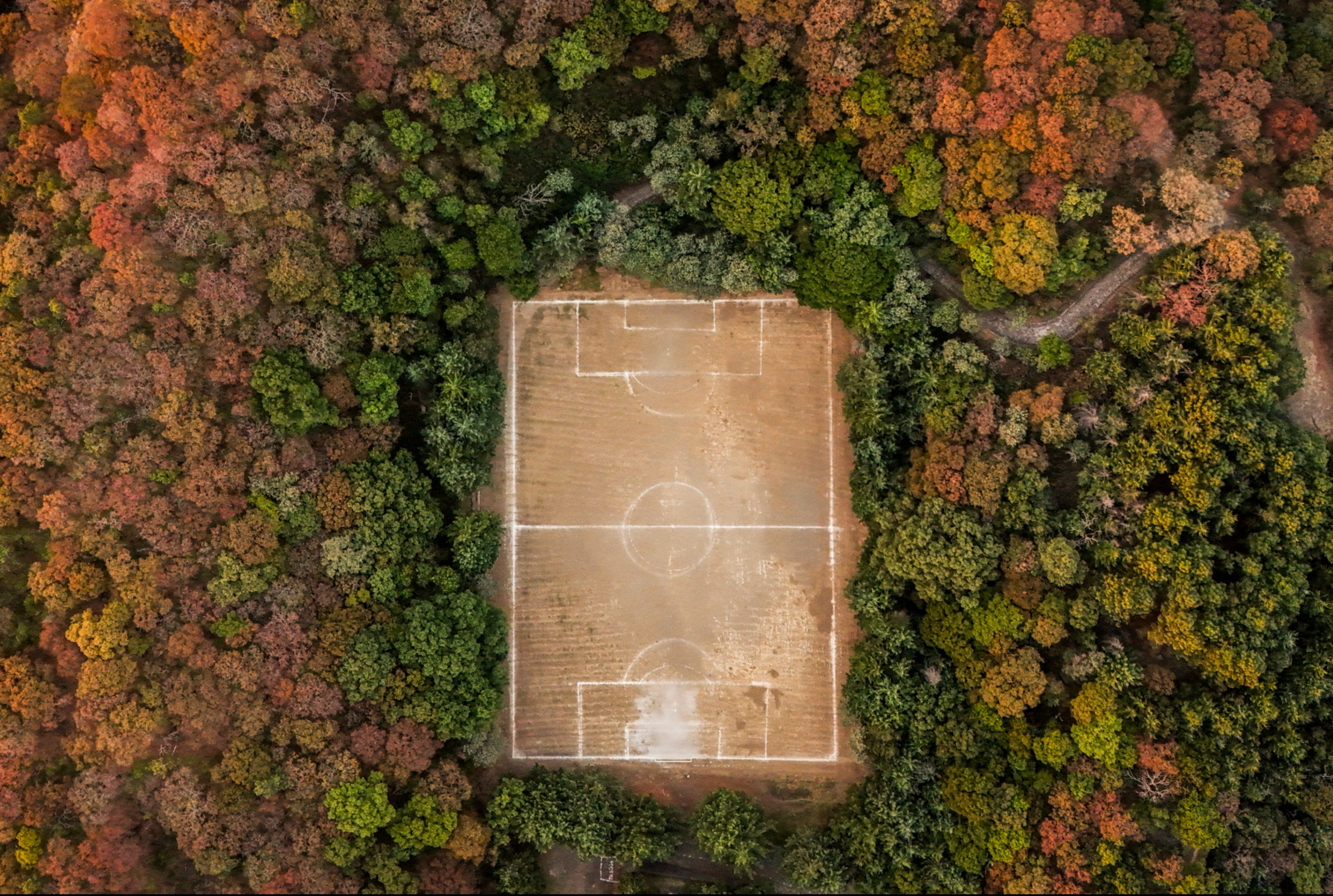
In Mexico, Soccer Is Played Wherever Space Permits
Images by Raquel Cunha; words by Cynthia Rodríguez
Best line: To the south, in a rural district on the outskirts of Mexico City, families arrive by car, motorcycle, bicycle and on foot to watch matches at the “Field of the Gods,” a soccer pitch inside the crater of the extinct Teoca Volcano.
Mist moves between pine trees and fruit orchards that frame the pitch in the former crater, nearly 700 meters (2,300 ft) above the sprawling capital. Built by the community more than 60 years ago, it is used by amateur local teams on Sundays.
What Is the Small Web? by Aral Balkan via his website
Best line: The Big Web is the centralised web; it is a web in the sense of a spider’s web. The spiders that sit at its centre waiting to suck you dry are Big Tech people farmers like Facebook, Google, etc. The Big Web has “users” – a term Silicon Valley has borrowed from drug dealers to describe the people they addict to their services and exploit. We farm users in server farms. On the Big Web, we can fit thousands of users into a single server and Megacorps “scale” to run thousands upon thousands of servers in their farms.
On the Big Web, you never own your own home. You must rent your home from Megacorps. Most often, you don’t have to pay for your home using money. You pay for it by forfeiting your privacy, freedom of speech, and your other human rights. Collectively, we pay for it by forfeiting a democratic future.
The mass surveillance and factory farming of human beings on a global scale is the business model of people farmers like Facebook and Google. It is the primary driver of the socioeconomic system we call surveillance capitalism.
7 Days of Waterfalls and Small Towns on Lake Superior via AFAR
Best line: Start your day on a mountain bike, take in a small-town art scene, and then make a dinner reservation (without having to set an alarm to secure it)—it’s all completely possible. Wilderness and creative spirit combine in the Arrowhead Region for a nature- and culture-filled experience. This week long itinerary weaves together outdoor adventure, exquisite dining, and plenty of charm found only in this region of the state.
How the ‘Picasso of ponds’ Went From Shaping Golf Courses to Making Freshwater Homes for Wildlife by Patrick Barkham for The Guardian
Best line: Although it may look like a big dirty hole, Hancox is creating “a pond within a pond within a pond, like a Russian doll,” he says. This means there is a large pond in winter with nature-rich shallow ephemeral areas, but as the water dries out in summer there are not isolated pools where aquatic life will perish. Instead, Hancox ensures the topography is sculpted so that water – and its life – can always retreat to the deepest part of the pond.
home tour
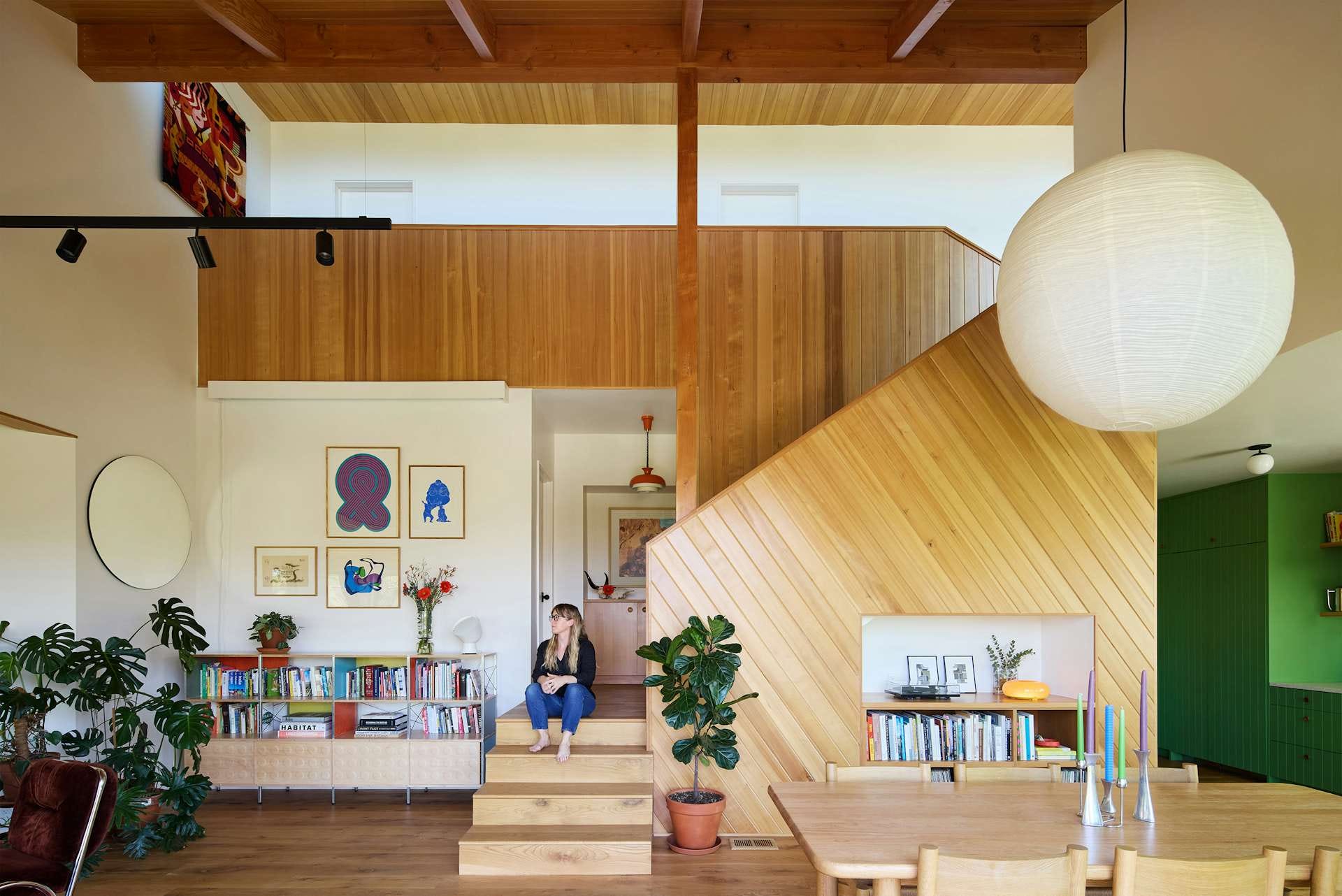
She Designed It. He Built It. Together They Beat L.A.’s Brutal Housing Market
By Grace Bernard for Dwell
Best line: She imagined her personal home as an opportunity to integrate design with the dynamic natural topography of Northeast Los Angeles. Her entry sequence invites guests to descend into the hill under a vaulted double-height ceiling of Western Hemlock. Large north-facing windows bathe the space in warm sunlight, framing the woodlands and snow-capped San Gabriel Mountains beyond.
It is a house without hallways; circulation to private areas is borrowed from the open communal space. Playful use of color and texture serve as a counterpoint to gentle natural materials and introduce wonder and unexpected joy into the everyday.
late checkout
A non-exhaustive list. Might make it a regular feature.
Architecture & Interiors
Art, Illustration & Photography
Gardeners
Newsletters About Place
Whitney Leigh Morris: Rightsizing
Rob Stephenson: The Neighborhoods
Weird Little Websites
The Library of Babel: a site with every combination of words possible in the English language
MelonLand Forum: not what it sounds like; a community for online art creation
⭐ Neocities: a site to find other weird little websites
Poolsuite: always-on summer radio with vintage computer design
Seth Putnam is an editor and writer in Chicago. He lives with his wife, son, and daughter in a 1920s home that is the epitome of a work in progress.
“Instructions for living a life: Pay attention. Be astonished. Tell about it.” —Mary Oliver